
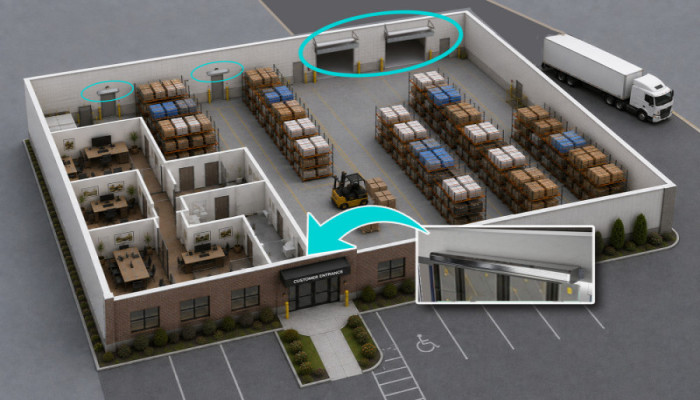
Air Curtains can help support a building’s LEED certification strategy by improving energy performance and “building-envelope operation”. This means they help prevent conditioned indoor air from escaping through a building’s doors. While Powered Aire Air Doors by themselves are not LEED certified, they help contribute to energy-saving strategies that help satisfy LEED prerequisites and earn LEED points.
Reduce heating and cooling loads – By retaining conditioned air when doors are open, air curtains can reduce the additional heating & cooling required to maintain indoor conditions. This can contribute to improved whole-building energy performance—the central objective of LEED’s Energy & Atmosphere requirements and credits.
Support LEED’s “Optimize Energy Performance” strategies – LEED awards points for energy performance improvements beyond its baseline requirements. Energy savings attributable to reduced doorway infiltration can help contribute to the project’s overall modeled energy-performance improvement when appropriately incorporated into the project’s energy analysis.
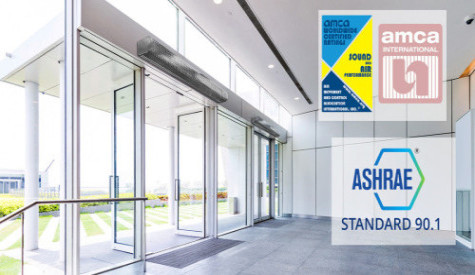
Support ASHRAE 90.1 compliance – LEED energy requirements are closely tied to ASHRAE 90.1. Current LEED versions reference different editions depending on the rating system and registration date, so the project’s specific LEED/ASHRAE requirements should always be verified.
Vestibule Exception Air Curtains – Air Curtains are recognized as part of the ASHRAE 90.1 standard for select entrance applications when applicable performance and installation requirements are satisfied. This means Air Curtains can be used to replace Vestibules. For LEED projects, the applicable ASHRAE edition and local energy code should be checked to ensure the air curtain meets the requirements.
Provide verifiable air-performance data – ANSI/AMCA Standard 220 establishes laboratory testing methods for air-curtain aerodynamic performance. AMCA currently lists several Powered Aire air curtains as certified. This provides designers and architects with independently rated performance information for specification and compliance documentation.
Other Certifications to Consider – In recent years, two other certifications and standards have gained popularity: the WELL Building Standard and Phius Certified Projects. The WELL Building Standard focuses on occupant health and well-being by promoting more comfortable, healthy indoor environments. Phius focuses on maximizing building energy efficiency and minimizing energy loss, including losses associated with frequently opened doors and windows.
Powered Aire air curtains can support energy-conservation strategies for LEED projects, particularly by reducing infiltration and improving modeled building energy performance. While air curtains alone do not ensure LEED certification, they can play an important role in creating more energy-efficient buildings while supporting occupant comfort and well-being.